

American Characterizations
my thoughts on The Drama (2026) SPOILERS

The Rutgers Story
In 2021, the Rutgers University police were called to search my dorm for an assault rifle. Telling this story to a friend at a party, I add: “I have no idea why they thought I was going to shoot up the school. It’s not like I’m some crazy white guy.”
“Girls shoot up schools too.” They say.
“Maybe,” I say, “but not, like, black girls.”
What had happened was: I transferred to Rutgers from community college in 2020. All campuses were on lockdown during the Fall, but during the Spring, I was allowed to live in the limited housing (despite most of the classes still being held over Zoom). I split a 4-person apartment with another student, and we were both vaccinated and tested once a week. This was my first time living with people other than my family, and it was strange. I spent most of the prior year crying in my childhood bedroom, watching old Paramore concert recordings, and did not have many close friends living in my state (or, most of my close friends were online), but I believed that transferring to a new school could help fix that. And either way, I was a film major, so being able to shoot my assignments on campus and access equipment was an important advantage.
Living in my apartment was as good as I thought it was going to be. I had a king-sized bed (two twin-size dorm beds pushed together), junk food, weed, and no parental supervision. Like most 20-year-olds, there was nothing more important to me than any of these things. They were also the things that frequently brought 20-year-olds together, like me and the other handful of kids living on my floor. The lack of RAs especially helped with this. We weren’t all extremely close, but we enjoyed the company. Some nights we even went for walks in the snow around the silent campus, trying to figure out what it would look like if it were alive.
One Sunday morning, my parents called. They knew that I had been depressed for a while, and decided to cheer me up with a trip to the movies. Now typically, whenever my parents visited my dorm, I would hide any of the paraphernalia I didn’t want them to see in my closet. So I began to put away all of my bongs, pipes, vapes, cigs, etc. when suddenly I realized that I didn’t have enough space to hide them this time, and as you can imagine, I was not very careful or smart or organized about any of this, or anything in general. I just needed another closet.
I texted my roommate (white girl), no answer. I texted my new friend (black girl) living across the hall, no answer. I texted my other two new friends (white guys) living down the hall, they answered. The conversation went similarly to this:
Me: Hey can I hide something in ur dorm
Friend: No we don’t feel comfortable w that
Me: Ok I guess I’ll go hide my AK47 somewhere else1
Then I text my friend (black) across the hall again:
Me: Hey can I hide something in ur dorm
Me: My parents are coming over
Friend: Yeah go ahead. Sorry at my mom’s
I hide the rest of my bongs, pipes, vapes, cigs, etc. in my friend’s dorm. I go to the movies. I watch Nobody starring Bob Odenkirk. Credits roll. I pull out my phone to rate the film exactly 3 ½ stars on Letterboxd, but there are so many missed notifications that the screen can’t even load them all.
(30 Missed Calls)
Roommate: are u in class?
Roommate: where are u
Roommate: are you at the dorm?
Roommate: u need to come to the dorm
Roommate: pls answer
My parents and I pull up to the apartment, and the first thing I notice is a cop car outside.
“I’ll head up from here,” I say.
“No! We’ll walk you to your dorm,” my mom steps out of the car.
An awful feeling begins to weigh me down. I don’t know what happened, but I know it involves me.
We head up the elevators, and as soon as we step out into the hall, we see 2 police officers waiting at my door. For the first time (and worst possible time) in my life, I genuinely fell to my knees and started crying.
While I was out with my parents watching Bob Odenkirk’s decent film, the guys down the hall called our RA and reported that I was hiding an assault rifle somewhere in the building. My parents and I were questioned by the police, then they searched my dorm (there was a terrifying moment where my tripod kit did alarmingly look a lot like a rifle case but, of course, was unzipped only to reveal my tripod kit) and left me with the Office of Student Conduct’s info. I was not going to be arrested or brought in for further questioning, but sent out of housing to prevent any further scares.
To this day, I cannot believe they deadass thought I was planning on shooting up the school. In their defense, I should not have been trying to hide anything in anyone’s dorm. The text “Hey can I hide something in ur dorm” is weird, and then offhand sarcasm about having an AK-47 is even weirder. But from what I remember, we hung out enough times for me to assume that we had already established a familiarity. And like, hey, I smoke weed. I’m chill. Also … I’m a girl? And I’m black. Well, half-black half-Filipino. Did they really think that I was a Blasian, weed-smoking school shooter? Did I really still seem like that much of a fucking chud2?
My friend from across the hall came home the night after the event, and I told her everything that happened.
“They thought you were gonna shoot up the school?” She laughed.
“Yes,” I hesitate, “Do I really give off that vibe?”
“No, no. They’re just white.”
The Drama
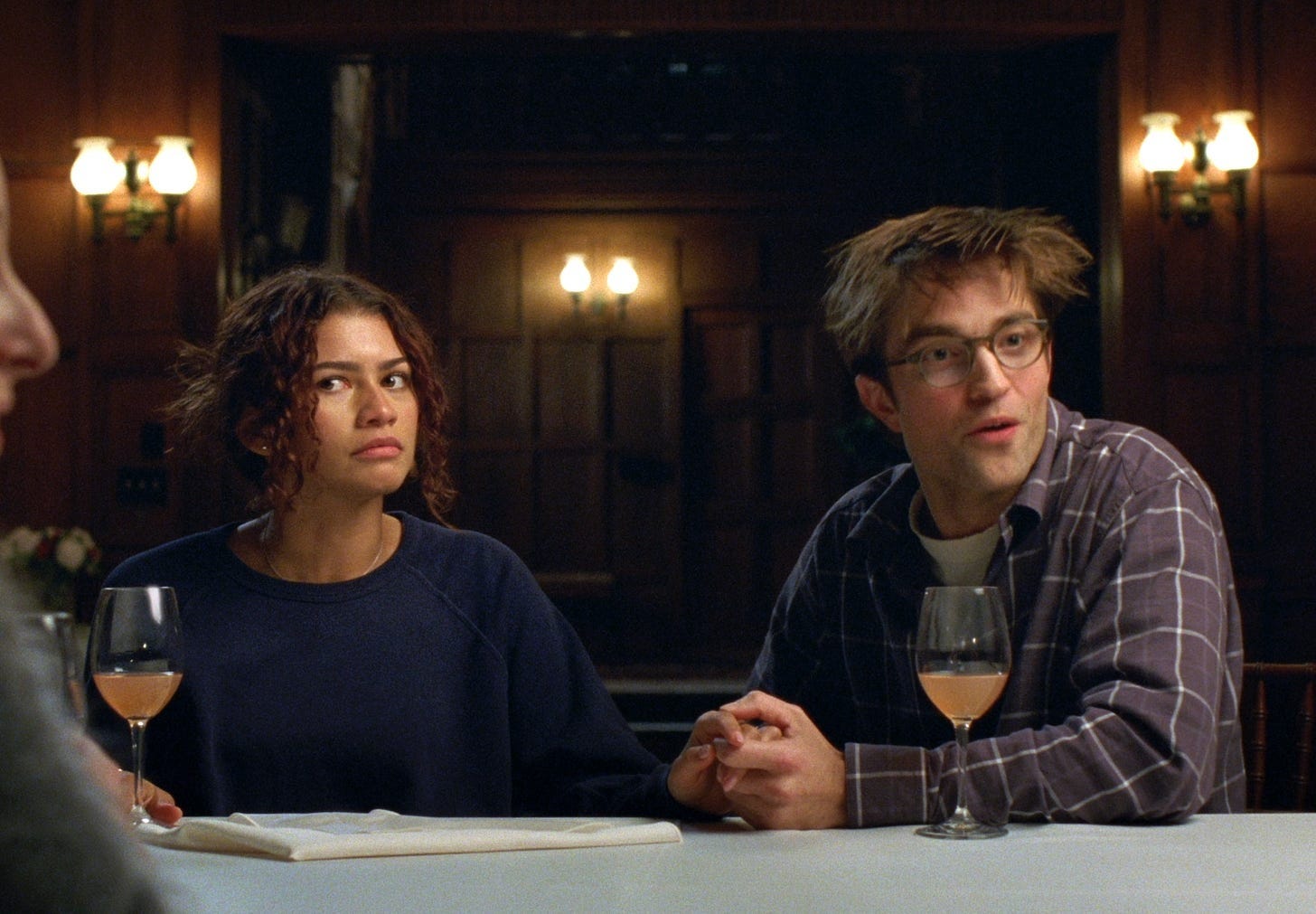
I was reminded of the Rutgers story when I watched The Drama (2026) in theaters last Thursday. I went into this film trailer-blind with zero knowledge of what Emma’s secret was going to be, and I was not disappointed in the slightest. I gasped, I laughed, I cried. It’s one of my favorites of the year.
The Drama is a dark romantic comedy about a woman who drunkenly reveals a major secret to her fiance the week before their wedding. Charlie (Robert Pattinson) and Emma (Zendaya) are at their menu tasting with another couple, Mike (Mamoudou Athie) and Rachel (Alana Haim), when Rachel bullies the group into sharing “the worst thing they’ve ever done”. They go around the table, starting with Mike and “The Dog Story” (He instinctively used his girlfriend as a human shield to protect himself from a dog). Then Rachel, and that one super random crazy silly time she locked a disabled child in a closet and ran away (what?). Then Charlie, who cyberbullied a kid enough to (possibly) make them move out of town. Emma looks a little disgusted, then realizes it’s her turn. Emma’s “worst thing” is:
“I, um… I like, almost did a mass shooting.”
When Emma was 15, she was bullied and depressed, leaving her with enough alone time to develop a niche micro-celebrity following on forums with similar interests to “Columbiners” within the True Crime Community - a nonfictional fandom where other bullied and depressed chudlings glorify school shooters, fantasize about their own shootings, and listen to Sematary.
(A parody of a TCC fan edit made for Emma by @superhappylobster40oz on TikTok:)
She explains that she fully planned a shooting, but did not attempt it, due to another shooting that happened the same day at a mall nearby. This shooting inadvertently caused her to then join a gun violence awareness group (lol), make some real friends, and grow to become the person telling this story. After the reveal, Charlie is in denial, Mike is scared, and Rachel is pissed.
“You know my cousin’s in a wheelchair because of a shooting, right?”
Rachel yells at Emma, calling her secret “fucking disturbing”, and gets up to leave with Mike. Emma vomits.
Charlie is haunted by Emma’s morally-ambiguous past throughout the film, and his neurosis results in him impulsively kissing his coworker (Hailey Benton Gates), and then getting headbutted by her boyfriend (Michael Abbott Jr.) at the wedding. Finally, nose broken and at his wits’ end, Charlie meets Emma at their favorite diner, sees her in her muddy gown and beautiful orange puffer, and falls in love with her all over again.
It’s nice to meet you, Charlie.
It’s nice to meet you, Emma.
I was not very familiar with Kristoffer Borgli’s films before The Drama. I had seen Dream Scenario (2023), but did not find it as memorable as this. Ari Aster also has a producer credit on this film, which makes sense considering I love most of his work. I’ll be sure to check out Sick of Myself (2022) next if its themes are any similar.
Also, Charlie’s boyfailure3 nature reminded me a bit of Tom Hanks in The Money Pit (1986). Does anyone here fuck with The Money Pit? Fun fact: The Money Pit is the movie that Peter prefers over The Godfather.
Anyway, The Drama reminded me of another dark comedy I rewatched a few days prior called The Dirties (2013).
The Dirties
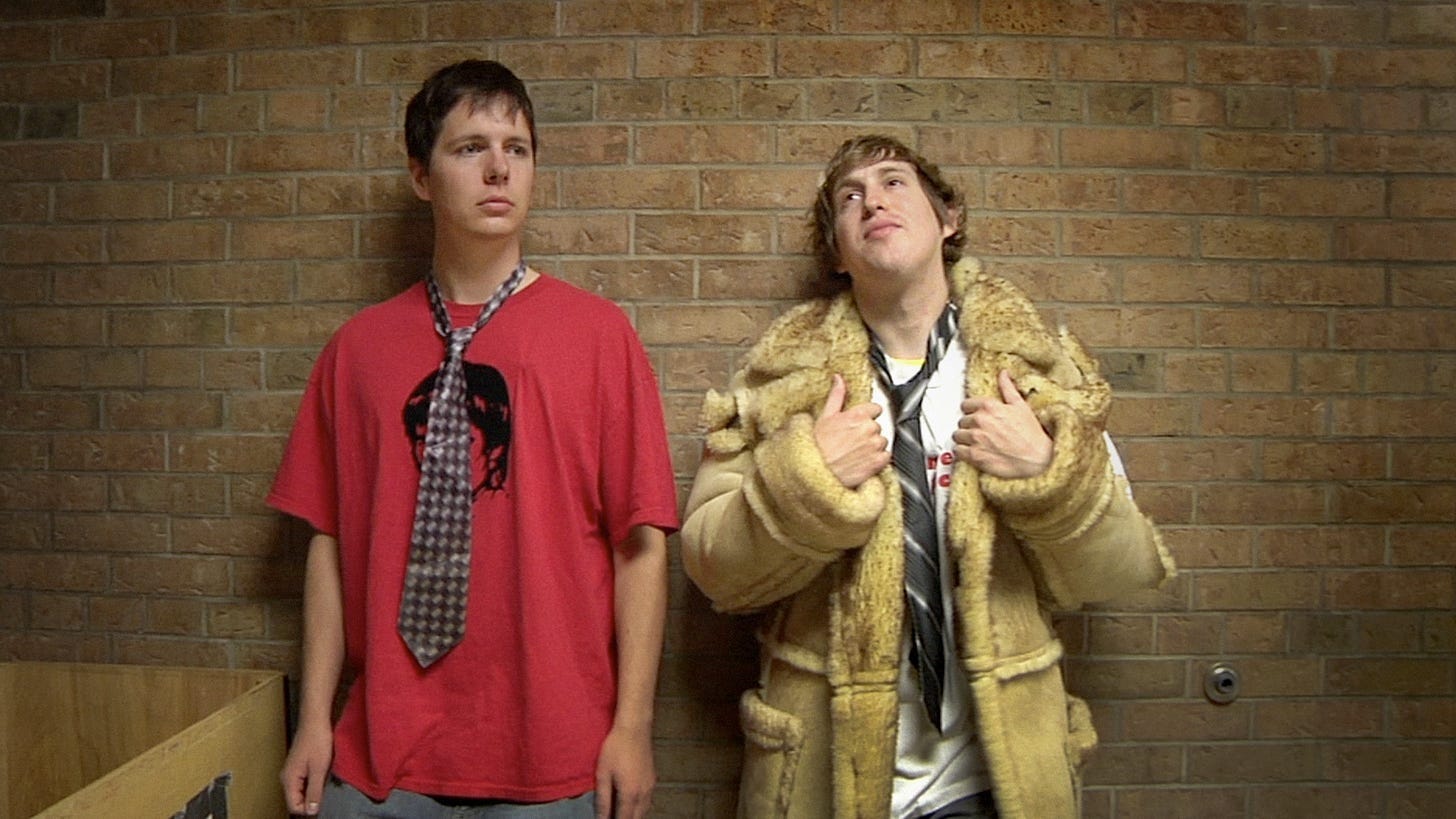
The Dirties is a mockumentary film about two high school students named Matt (Matt Johnson) and Owen (Owen Williams) who are working on a short film called, “The Dirties”. The short film is about Matt and Owen killing a group of bullies at their school, while referencing different movies like Pulp Fiction (1994), The Usual Suspects (1995) and Irreversible (2002). After presenting a rough cut of the film in class and getting violently beaten by the Dirties once again, Matt decides that he’s going to kill them in real-life. The film closely follows the slow decay of Matt and Owen’s toxic homoerotic friendship as Owen begins to fear Matt and shift his focus to wooing Chrissy, one of the popular girls. It ends with Matt setting up cameras around the school, killing two of the Dirties, and finding Owen hidden in an empty classroom, fumbling at the doorknob for an escape. Matt walks up to him, laughing, and says:
What are you doing? It’s me!
This is where the film ends, leaving it up to the viewer to decide whether Matt kills Owen or not.
I watched The Drama with The Dirties still fresh in mind, and found traces of Emma in both Matt and Owen. They could even represent the forked path she faced at 15. Both Matt and Owen were bullied by the Dirties, but Owen developed his personality, made friends, and found love, while Matt became a murderer (the two choices one is presented with when brutalized: get laid or kill everyone). Emma chose Owen’s path.
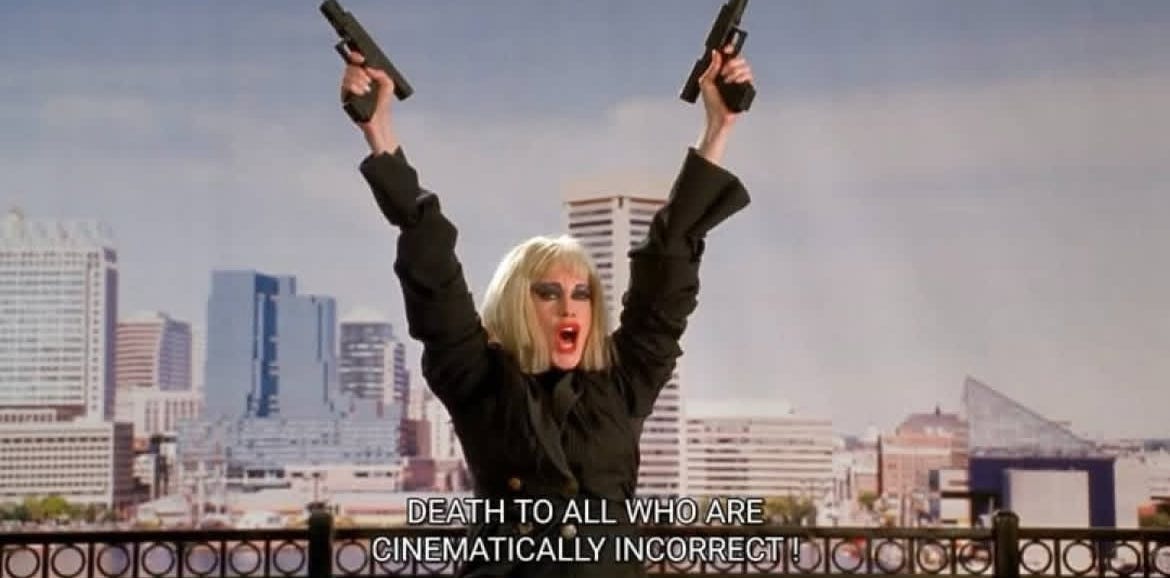
The most attractive quality of both of these films to me is how empathetic they are. In The Dirties, Matt is depicted as nothing more than an unpopular kid. Sometimes danger isn’t a moustache-twirling villain with a mortar bomb, it’s a film nerd with a superiority complex and a complete lack of boundaries (not me though, I’m chill). Or, for a closer comparison: Sometimes danger isn’t a blonde Evan Peters in a trench coat, it’s a film nerd with a superiority complex and a complete lack of boundaries (again, not me though.) Matt wipes Cheeto dust off his fingers while he edits the title sequence for “The Dirties”, and hums “DotA” by Basshunter while installing GoPros around his school. Details like these bleakly remind the viewer that any average person has the capacity for evil.
A similar sentiment is shared in The Drama with a flashback to a childhood Emma attempting to record a manifesto on her desktop webcam. She’s clad in all the accessories a 15-year-old thinks a legit badass adorns: heavy eyeliner, a camo jacket, skeleton-finger gloves, and a shark tooth necklace. She’s also holding the assault rifle she stole from her father, who served in the military. She begins to record her manifesto, but every time she manages to get more than a word out, the webcam notifies her for an update installation. The scene cuts to a wide shot of her bedroom, where Emma is dwarfed by the clashing posters of underground Memphis rap artists and pink IKEA kids’ section decor. I am typically a very mild-mannered person in the theater, but I could not help myself from doubling over at this. This scene was not only hilarious, but such a precise depiction of what a teenager who is struggling with their self-image, especially during the digital age, really looks like.
Both of these fictional shootings also happen around the same time: if Emma is 30 in the film, that would make her 15 in 2011. Matt and Owen are 17 in 2013. Whether intentionally written into the films or not, the early 2010s was a time when kids, including myself, were going through puberty while also beginning to see so much of themselves on social media all the time. Self-hatred was inevitable.
When these characters are presented so humanely, the audiences are left with a major question: What makes a school shooter?
The Drama literally asks us this question during a scene where Charlie is confronting Rachel, who is not only their friend but also the maid of honor, about not attending the wedding:
It’s like a whole thing in this country, isn’t it? I mean, think about it. If there’s a shooting practically every single day, then imagine how many people must have thought about it? Or like, planned one? Or even got close to it, but backed out or changed their minds for whatever reason? I’m sure there’s thousands of people like that. We just wouldn’t know ‘cause they would never tell anyone. They’re just out there … living normal lives. It really could be anyone!
Your high school English teacher did a hit and run. The girl you worked with for 6 months at a coffee shop moved to Idaho with her boyfriend and started a cult. We are all people who do things. We might have a hard time envisioning each other doing these things or understand why we’re doing them, but we do them anyway. So what makes a school shooter?
In The Drama, it’s mentioned that Emma might have only been planning the shooting for attention from her online fans:
I guess I was just like, intrigued. Like, the aesthetics of [shootings]. It was like a whole thing online, and I think I just thought it looked cool. I just started to believe this character that I was playing. And I guess it, like, got me a lot of attention, because I was a girl.
In The Dirties, Matt is literally playing a character who kills his bullies. During the shooting, he makes it a point to reassure his fleeing classmates that he’s a hero, and “just here for the bad guys”.
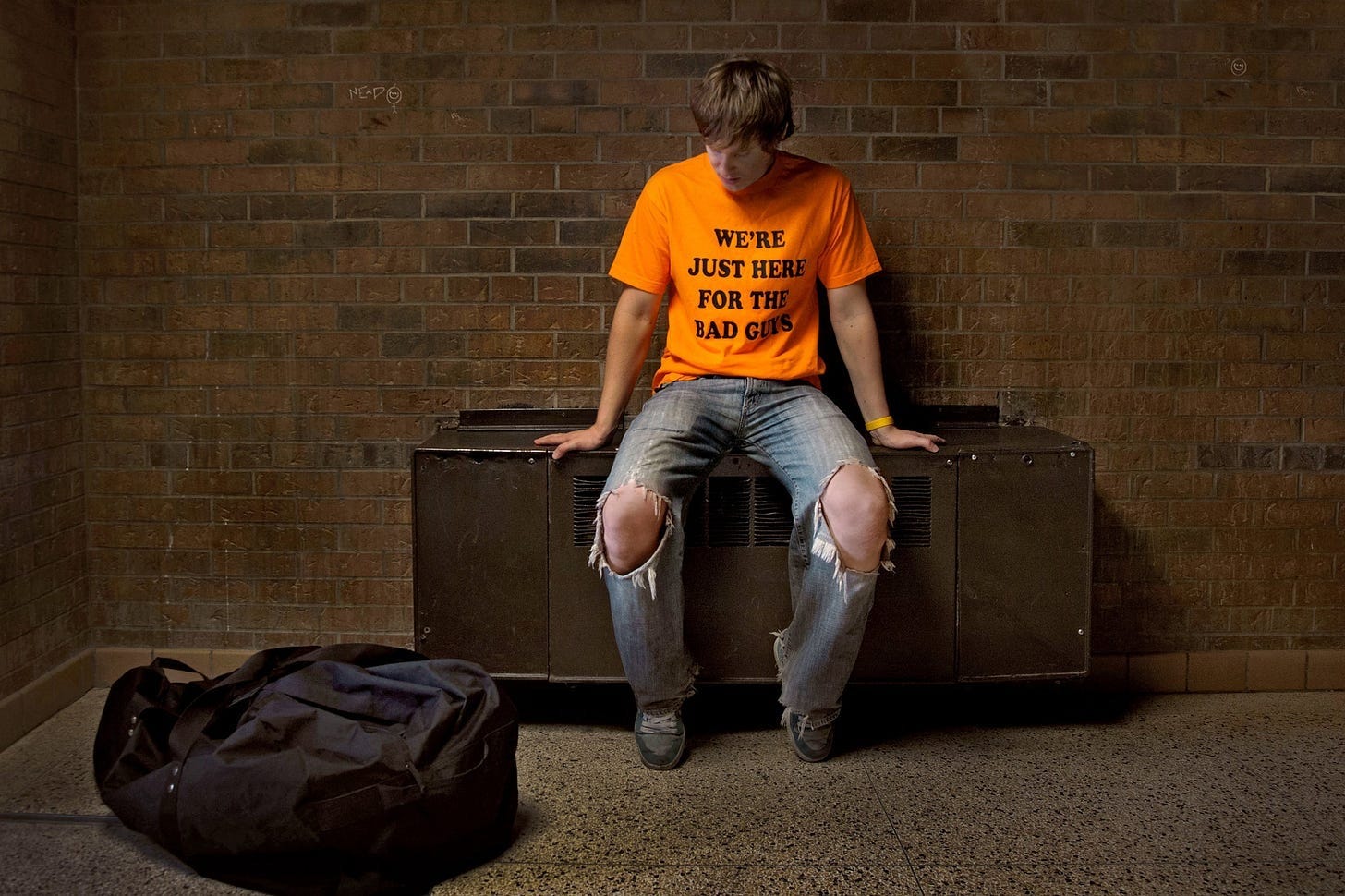
Matt also has zero concern for the safety of himself or others, as shown in one scene where he reenacts a scene from Snake Eyes (1998) while standing at the edge of a cliff. Owen begs him to take a step back, but he refuses, claiming that the bit “won’t look as good” if he’s not in that spot. Frustrated, Owen says:
This is not a movie right now. This is just you and me.
Matt continues to defend his bit, punching up by pretending to fall into a pit like Danny Glover in The Royal Tenenbaums (2001), and Owen yells:
Shut up! I don’t think it’s funny. And if I don’t think it’s funny, then who’s it for? You’re always acting. […] I don’t know what’s real with you and what’s [not].
The idea of a “school shooter” ends up being a role that anyone can cast themselves into when they’re disatissfied with who they really are. Emma and Matt both spun their life into narratives so that all of their suffering would have a more meaningful purpose, and that they could be known as saviors and/or rebels. They were dehumanized by their bullies, so they became characters.
NOTE: There’s also a very funny scene in The Drama where Emma wakes up alone the morning after the menu tasting, and imagines a conversation where Mike consoles a frightened Charlie:
“You’re not marrying a psychopath! Fly back to London. Leave right now. Don’t even go back to the apartment. Get away as fast as you can. I’ll take care of it. I’ll call the police, I’ll beat her up. Whatever you want.”
that reminded me a lot of the black & white false memories from Matt Johnson’s other project, Nirvanna the Band the Show. It’s a bit I hope to see more of in comedy, like in general.
Can a black girl be a chud?
As a very American, suburban, and biracial black woman who also attended private school and was a giant loser, I saw a lot of myself in Emma. So much of myself, in fact, that I might actually be devastatingly equipped to write this essay:
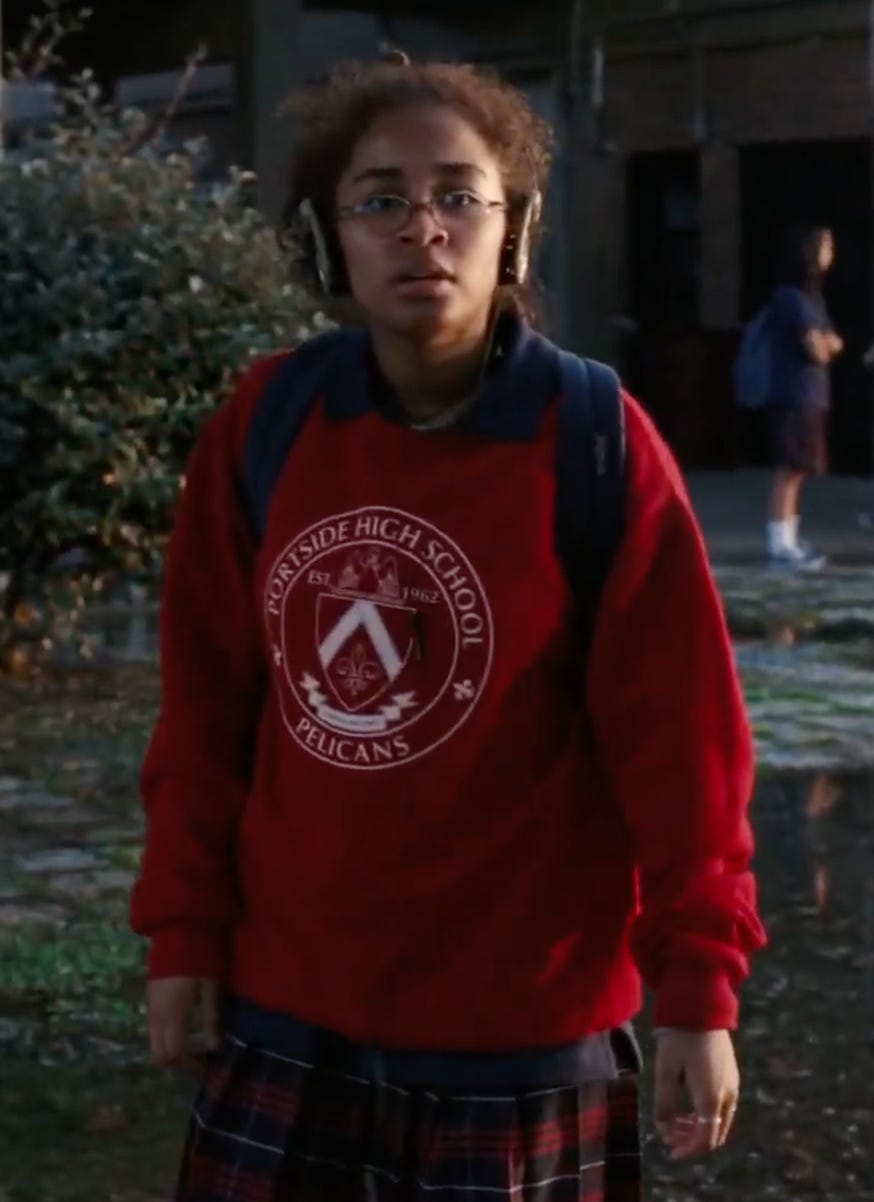
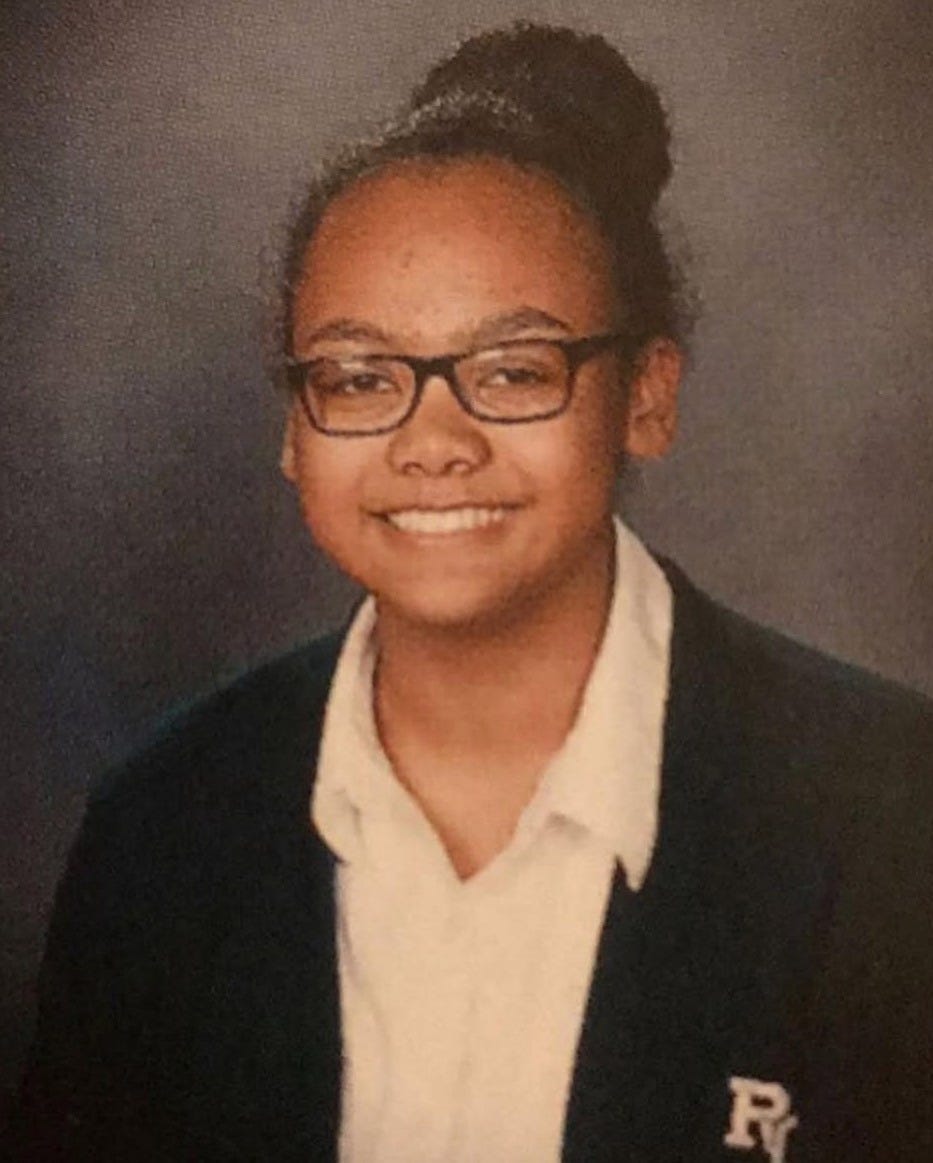
Unlike Emma, I did not want to shoot up any schools. But probably like Emma, I was upset when Odd Future disbanded4
Seeing myself represented on screen wasn’t life-changing for me, but it did make me feel a bit more real - probably in the same way that those guys who really like Donald Glover do. I don’t watch every movie hoping that some depressed black girl will show up, but as James Baldwin so deftly put it:
You think your pain and your heartbreak are unprecedented in the history of the world, but then you read. It was books that taught me that the things that tormented me the most were the very things that connected me with all the people who are alive, who had ever been alive.
I don’t believe that Emma was written with her race in mind, as the shock of her character being a school shooter is mostly about her gender, but I do believe that it is still an important part of the film. I also believe that Zendaya’s thorough and consistent involvement with the creation of her past roles also ensures that Emma was performed with her blackness in mind. One example is Rue Bennet from HBO’s Euphoria, a show that Zendaya later earned executive producer credits for.
I don’t care for most of Euphoria, but a montage from the beginning of Season One set to “Fly Me to the Moon” by Bobby Womack made me sob the first time I saw it (and many times after):
Rue is performed with the same rawness as Emma. There’s an honesty to both portrayals that can mostly be attributed to Zendaya alone, due to her understanding of who these (especially black and female) characters would actually be if they were real - not just written.
In The Drama, race is discussed, but not with Emma. Both of the relationships at the center of the story are interracial - a white woman with a black man, and a white man with a black woman. Mike is shamed by his partner for not being masculine enough, while Emma is shamed by hers for being too masculine. In “The Dog Story”, Mike uses his girlfriend as a human shield. Rachel is obsessed with this story, and forces him to tell it in front of their friends. It’s safe to assume that humiliation rituals might just be a part of Rachel’s nature, until another scene where she says to Charlie:
Oh, please! Look at Mike. He grew up around guns and he’s terrified of them.
To which Mike, confused, responds:
I didn’t grow up around guns.
Is Rachel secretly fixated on others deeming her black husband “safe”? Is she ashamed of him for being cowardly? Also, is Alana Haim the modern-day female character-actor equivalent to Christopher Mintz-Plasse? Meanwhile, Charlie is across from them, failing to defend Emma from being labeled as “crazy” and dangerous. The racial tensions (every time I say this term, I think of Rachel Tension from To Wong Foo) only aggravate the gossip.
Then, Charlie kisses his white female coworker, Mischa. First, he interrogates her on whether or not she’d call the cops on her boyfriend if she “found out he almost shot up a school”, then punches his empty Diet Coke can across the break room and storms out when she says yes. She follows him, asks what the outburst was about, and then he kisses her. It’s an action of complete “impulse”, like Mike’s “Dog Story”, or what Rachel says about her confession earlier in the film:
It was an impulse, Charlie. I didn’t plan a cold-blooded murder.
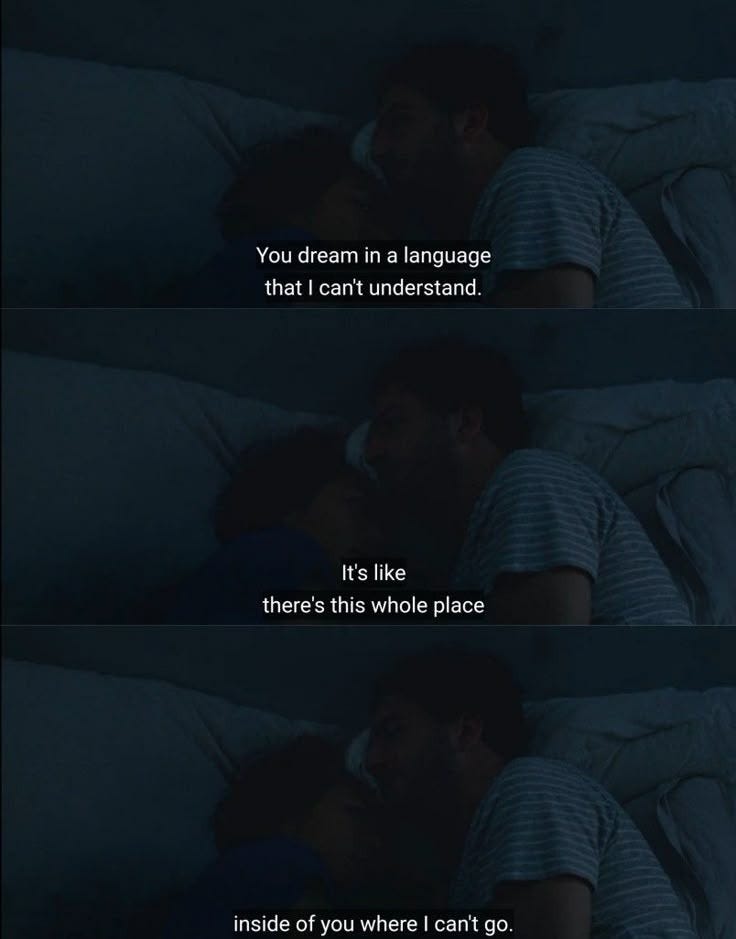
But it’s repulsive nonetheless. Mischa is confused, yet reciprocates (prior to this, she confesses that she’s cheated on her boyfriend, Blake AKA the American Skargård, before), and Charlie rips open her blouse. Buttons go flying across the room - they fondle each other with an insincere, choregraphed passion. But when he lifts up her skirt, the guilt hits him immediately. He walks away and begins to cry, leaving Mischa with secondhand embarrassment and a ripped shirt. With all of the gossip, Mischa could be interpreted as the woman Charlie thinks he’s supposed to want - a woman with less distance from him.
The All-Loving Eye
In a high school flashback, Emma participates in a group exercise where students must pair up and stand in front of each other. A teacher instructs:
Look at that person that’s right in front of you. See if you can sense what they’re experiencing right now. Look at them in the eyes, acknowledge them, be with them, be aware of them.
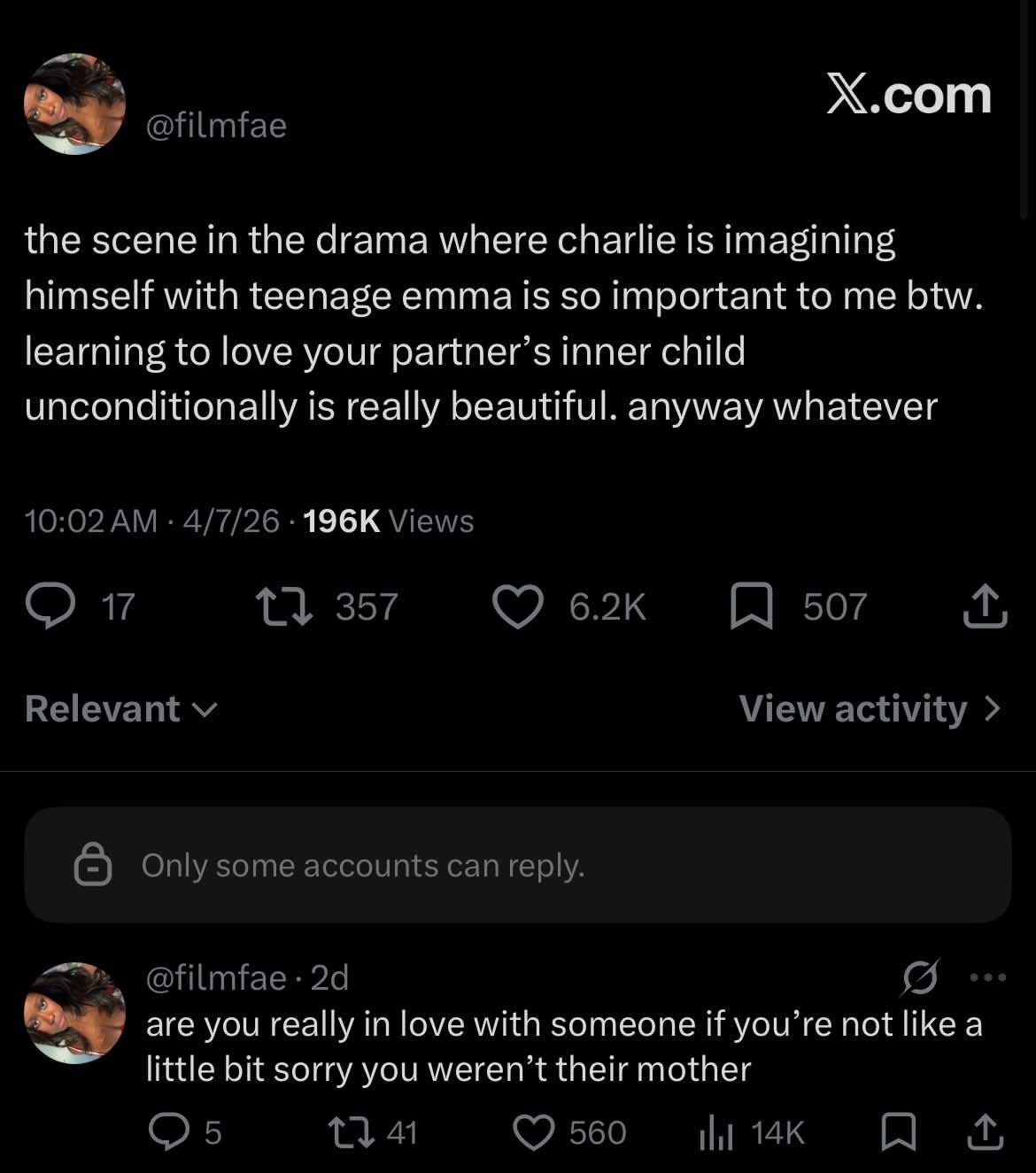
This is the central message of The Drama. People need to be treated like people, and not like characters, in order to be fully understood. You may not always get the truth, or what you would like to hear, but you will understand. This especially goes for life partners, and the many lives they lived before they met you.
my fault
An online political term for a loser, usually on the far-right.
speaking of Tyler, I relistened to Pigs while writing this essay and … wow!
finally got to this, great piece
loveee this and i love how you connected it to the dirties i thought of that film too!!